

Overview
Family violence has a disproportionate impact on Aboriginal people in Victoria, particularly women and children, regardless of whether they live in rural, regional or urban areas. Aboriginal communities in Victoria have consistently led the way in developing strategic priorities and actions to prevent family violence.
Measures under Goal 3 have worsened
Family violence incidents and affected family members have increased. This has coincided with more notifications to child protection where family violence is identified.
The proportion of Aboriginal adults who ran out of food and could not afford to buy more has also increased in 2025.
Goal 3 directly aligns with the following Closing the Gap Outcomes and Targets
Outcome 9: Aboriginal people secure appropriate, affordable housing that is aligned with their priorities and needs.
- Target 9: By 2031, increase the proportion of Aboriginal and Torres Strait Islander people living in appropriately sized (not overcrowded) housing to 88 per cent.
Outcome 13: Aboriginal families and households are safe.
- Target 13: By 2031, the rate of all forms of family violence and abuse against Aboriginal and Torres Strait Islander women and children is reduced at least by 50 per cent, as progress towards zero.
Closing the Gap - How Victoria is tracking nationally
Outcome 9: In 2021, 81.4 per cent of Aboriginal and Torres Strait Islander people were living in appropriately sized (not overcrowded) housing across Australia, compared to 88.8 per cent in Victoria. Nationally, based on progress from the baseline year (2016), Target 9A shows improvement but is not on track to be met.
While Victoria has reached the national target threshold, data collection methodologies do not adequately capture the circumstances of Aboriginal and Torres Strait Islander people in Victoria experiencing, or at risk of, homelessness. The Victorian Government has commenced a process to set its own homelessness target to measure and respond to the specific needs of Aboriginal and Torres Strait Islander people in Victoria.
Target 9B, which aims to ensure Aboriginal communities receive essential services that meet or exceed jurisdictional standards, is not able to be reported against as there is no data source currently available that includes all required data elements.
Outcome 13: In 2018–19, 8.4 per cent of Aboriginal and Torres Strait Islander females, aged 15 years and over, experienced domestic physical or threatened physical harm across Australia, compared to 7.5 per cent in Victoria. This target relies on National Aboriginal and Torres Strait Islander Health Survey data. No new data is available since the baseline year (2018–19).
Data Note
The following measures rely on datasets that are infrequently collected. No new data was available at the time of reporting.
- Measure 3.2.2.a Median weekly gross household income
- Measure 3.2.2b Proportion of households with approximately less than 50 per cent median equivalised income
- Measure 3.2.3a Proportion of households experiencing rental stress
- Measure 3.2.3b. Proportion of households in mortgage stress
- Measure 3.2.5a Proportion living in overcrowded dwellings
- Measure 3.2.5b Proportion of households that are overcrowded
Historical data for these measures is available on the First Peoples – State Relations website
3.1 Reduce the incidence and impact of family violence affecting Aboriginal families
Measure 3.1.1 Number and proportion of family violence incident reports involving an Aboriginal other party; and proportion of those who were the subject of a previous family incident report1 and proportion of those who were the subject of a previous family incident report
What does the data say?
In 2024, there were 9,024 Aboriginal other parties recorded for family violence incident reports. Of those, 8,055 (89.3 per cent) were a repeat incident.
Of the 9,024 other parties, 3,519 (39 per cent) were charged. Repeat incidence accounted for 3,357 of those charges.
Does the data show improvement or decline?
Since 2023, the number of Aboriginal other parties recorded has increased by 1,760. Since 2015, it has increased by 4,220.
The number of reported family violence incidents which involved repeat incidence, and where charges were laid, have increased alongside the number of reports overall.
How does this compare with non-Aboriginal results?
In 2024, there were 92,907 non-Aboriginal other parties recorded for family violence incident reports. Of those, 69,464 (74.8 per cent) were a repeat incident.
Of the 92,907 family violence incident reports with non-Aboriginal other parties, 28,114 (30.3 per cent) resulted in charges. Repeat incidence accounted for 69,464 of those charges.
1. In family incident reporting, the ‘other party’ is the person deemed to be the predominant aggressor. This could be a current partner, former partner or a family member.
Measure 3.1.2 Number and proportion of family violence incident reports involving an Aboriginal affected family member; and proportion of those who were the subject of a previous family incident report2, and proportion of those who were the subject of a previous family incident report
What does the data say?
In 2024, there were 7,087 Aboriginal affected family members recorded for family violence incident reports. Of those, 6,023 (85 per cent) were a repeat incident.
Of the 7,087 incidents with Aboriginal affected family members, 2,410 (34 per cent) resulted in charges. Repeat incidence accounted for 2,228 of those charges.
Does the data show improvement or decline?
Since 2023, the number of Aboriginal affected family members recorded has increased by 1,093. Since 2015, it has increased by 2,944.
The number of reported family violence incidents which involved repeat incidence, and where charges were laid, have increased alongside the number of reports overall.
How does this compare with non-Aboriginal results?
In 2024, there were 93,631 non-Aboriginal affected family members recorded for family violence incident reports. Of those, 66,496 (71 per cent) were a repeat incident.
Of the 93,631 family violence incident reports with non-Aboriginal affected family members, 28,794 (30.7 per cent) resulted in charges. 24,200 of those charges were for repeat incidences.
2. In family violence incident reporting, the ‘affected family member’ is someone deemed to be most harmed and affected by events occurring during the incident.
Measure 3.1.3 Number and proportion of notifications to child protection for children and young people where family violence is identified
What does the data say?
In 2024–25, family violence was identified in 8,162 child protection notifications for Aboriginal families. This accounts for 51.9 per cent of all child protection notifications for Aboriginal families.
Does the data show improvement or decline?
Since 2023–24, the number of notifications where family violence has been identified has increased by 1,542. The proportion of notifications where family violence has been identified has also increased by 7 percentage points, up from 44.9 per cent.
Since 2015–16, the number of notifications where family violence has been identified has increased by 2,651. The proportion of notifications where family violence has been identified has decreased by 3 percentage points, from 54.9 per cent.
Both the increase in number and the increase in proportion of notifications where family violence is identified over the short term means that results are not improving for this measure.
How does this compare with non-Aboriginal results?
In 2024–25, family violence was identified in 58,443 child protections notifications for non-Aboriginal families.
A third Aboriginal Access Point established in the Mallee
SDRF enabler 4: Transfer power and resources to community
Aboriginal Access Points complement The Orange Door network to provide access to culturally safe information, planning, referral and exit pathways for Aboriginal families affected by family violence. The self-determined approach to delivering the Aboriginal Access Points supports increased accessibility of the family violence and children and families service systems, expanding choice and ensuring greater agency in accessing and utilising culturally safe services.
Two Aboriginal Access Points marked 12 months of operation in 2024, following extensive community consultation to design and implement the Aboriginal-led service model. Building on the success of the existing services, DFFH worked closely with Mallee District Aboriginal Services and the Mallee Dhelk Dja Action Group to establish the third Aboriginal Access Point in October 2025. Three Aboriginal Journey Walkers were successfully appointed to their positions in July 2025, working with community to raise awareness of the new service.
Implementation of the access point has been governed by a project control group with representation from the Mallee Dhelk Dja Action Group.
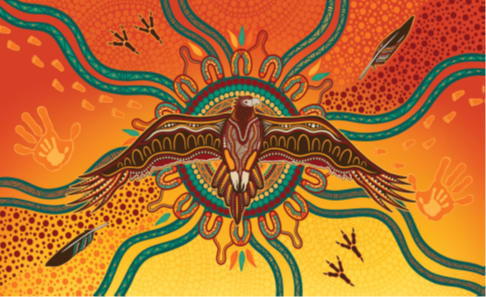
A local Aboriginal artist, Mandy Smith, was commissioned to develop artwork for the service. The artwork, ‘Keeping Our Mob Safe’, represents community members and families who are currently experiencing or have experienced the impacts of family violence. It honours those who have felt alone and afraid to speak out or seek help and support. The Bilyara (Wedge Tailed Eagle), in Barkindji, also known as Bunjil in some parts of Victoria, serves as a symbol of protection, reminding us that reconnecting with Country, culture and community is a powerful path to embrace in the healing journey.
3.2 Increase income and housing security for Aboriginal households
Measure 3.2.1 Proportion of adults who ran out of food in the previous 12 months and couldn’t afford to buy more
What does the data say?
In 2024, 38.7 per cent of Aboriginal adults ran out of food and could not afford to buy more.
Does the data show improvement or decline?
More Aboriginal adults ran out of food in 2024 than in 2023. In 2023, 26.0 per cent of Aboriginal adults ran out of food, a 12.7 percentage point increase in food insecurity within a year. Since 2017, food insecurity for Aboriginal adults has increased by 22.9 percentage points.
How does this compare with non-Aboriginal results?
In 2024, Aboriginal adults were 3 times more likely to run out of food than their non-Aboriginal peers. While non-Aboriginal food insecurity has also grown, it has been by less. In 2024, 12.8 per cent of non-Aboriginal adults ran out of food and could not afford to buy more. This was an increase from 2023 and 2017 of 7.7 per cent and 6.1 per cent respectively.
Measure 3.2.4 Proportion of Victorians accessing homelessness services
What does the data say?
In 2024–25, 14,032 Aboriginal people in Victoria accessed homelessness services. This accounted for 17.0 per cent of all Aboriginal people living in Victoria.
Does the data show improvement or decline?
Since 2023–24, 1,207 more Aboriginal people accessed homelessness services. This means the proportion of Aboriginal people accessing homelessness services has decreased in the short term.
Since 2015–16, 5,955 more Aboriginal people accessed homelessness services. This means the proportion of Aboriginal people accessing homeless services has increased by 2.9 percentage points over the decade.
It is difficult to assess whether this measure is improving or declining. Increase in access to homelessness services could mean that more people are accessing the services they need, or it could mean that more people require those services who did not need it before.
How does this compare with non-Aboriginal results?
In 2024–25, 87,554 non-Aboriginal people in Victoria accessed homelessness services. This accounted for 1.4 per cent of the non-Aboriginal population. Since 2015–16, while the number of non-Aboriginal people accessing homelessness services has increased by 5,472, the percentage of the population has not increased. In 2024–25, Aboriginal Victorians were 12.6 times more likely to access homelessness services than their non-Aboriginal peers.
Goal 3 – Victorian Government Investment and Action
The key Aboriginal Governance Forums for realising outcomes in this Domain are the Aboriginal Children’s Forum, Aboriginal Strategic Governance Forum, Dhelk Dja Partnership Forum, Victorian Aboriginal Health and Wellbeing Partnership Forum, and Victorian Aboriginal Housing and Homelessness Framework Implementation Working Group.
Family violence
Dhelk Dja - Safe Our Way: Strong Culture, Strong Peoples, Strong Families (Dhelk Dja)
Dhelk Dja is the key Aboriginal-led Victorian Agreement that commits the signatories – Aboriginal communities, Aboriginal services and government – to work together and be accountable for ensuring that Aboriginal people, families and communities are stronger, safer, thriving and living free from family violence. Dhelk Dja is built upon the foundation of Aboriginal self-determination.
In 2024, implementation of the second Three-Year Action Plan under the Dhelk Dja Agreement (the Plan) continued. The Plan was publicly released in April 2024 by the Minister for Prevention of Family Violence.
The Plan includes 116 activities to be delivered by DFFH, DE, DJCS and Victoria Police across the five strategic priority areas of the Dhelk Dja Agreement. The Plan also aligns strongly to Victoria’s commitment to deliver on Target 13 of the National Agreement on Closing the Gap.
The following department led activities were marked as completed for Dhelk Dja Koori Caucus endorsement in 2025:
- Strengthening resources and support for ACCOs and Dhelk Dja Action Groups to restore culture in a strengths-based way.
- Development of Aboriginal measures of success in Aboriginal-led prevention and family violence funded activities.
- Activities related to data for Aboriginal family violence service users.
Aboriginal family violence and sexual assault services funding
The Victorian Government has significantly increased funding to ACCOs for family violence and sexual assault service delivery from approximately $5.2 million in 2017–18 to approximately $83 million in 2024–25. This funding represents approximately 13 per cent of total family violence service delivery funding provided across Victoria in 2024-25. DFFH is committed to ensuring that funding and service agreements support self-determination by ensuring alignment to the Dhelk Dja 10-Year Agreement’s vision and strategic priorities. Family Safety Victoria has consistently set a target that at least 10 per cent of all new funding is provided to ACCOs. This practice was formalised as an action in the third action plan under Ending family violence: Victoria’s plan for change.
The 2023/24 State Budget committed $31 million to maintain Aboriginal-led family and sexual violence service delivery. A component of this budget outcome includes $6.1 million per annum in ongoing funding to Aboriginal frontline family violence services. DFFH is working with Aboriginal-led groups, the Dhelk Dja Koori Caucus and the ACCO Family Violence Sector Forum, to implement a self-determined, phased funding approach that includes service development, baseline, and equity (weighted demand) components.
Aboriginal Community Initiatives Fund (CIF) 2024-25
In May 2025, funding of $1.1 million was allocated by the 11 Dhelk Dja Action Group regions to 27 culturally appropriate, place-based community-led projects dedicated to preventing and responding to family violence in Victorian Aboriginal communities. Examples of CIF funded projects include:
- a local Aboriginal women’s group to support victim-survivors to build on their confidence and connect with each other
- a two-day ‘hoops against violence’ basketball event and community sports day working with young people impacted by family violence
- a Neernan (gathering) for Elders to raise awareness of elder abuse and yarn about solutions to prevent family violence.
The CIF has been operating for over 20 years and has funded more than 404 projects over the past decade.
Aboriginal Access Points
Staffed by an Aboriginal workforce, Aboriginal Access Points support Aboriginal women, children, men and families to navigate the family violence service system.
Implementation of the Aboriginal Access Points is a key deliverable of the first Dhelk Dja 3-Year Action Plan 2019–2022. Two Aboriginal Access Points have been servicing the Barwon and Bayside Peninsula areas since 2023. The Aboriginal Access Points are designed to be culturally safe and culturally responsive, underpinned by self-determination, and provide an Aboriginal-led service choice for Victorian Aboriginal communities. A third site was established in the Mallee area in October 2025.
Aboriginal Sexual Assault Services
In May 2024, Victoria’s Strengthening Women’s Safety Package provided additional investment to Aboriginal sexual assault services over three years to ensure that Aboriginal people who are victim survivors of sexual assault, including Aboriginal children and young people, can access culturally safe and appropriate holistic services delivered by Aboriginal-led services.
DFFH has worked with the Aboriginal Sexual Assault Working Group to collectively determine how the investment will be implemented. The working group is Aboriginal-led, and membership consists of the four ACCOs delivering the sexual assault services to Community. In 2024-25, the Working Group engaged in a series of workshops to determine the implementation approach that provided a boost to existing service delivery commencing in 2025-26 and will support expansion to an additional site in 2027-28.
The services align to Nargneit Birrang, the Aboriginal-led and co-designed statewide family violence holistic healing framework for Aboriginal communities across Victoria. Nargneit Birrang describes what Aboriginal holistic healing is, why healing is needed and how healing works to heal family violence and associated trauma including sexual assault for Aboriginal people.
Perpetrator responses - Aboriginal-led fathering project
The Family Domestic Sexual Violence National Partnership 2023-25 included funding to engage two ACCOs to design and deliver a program for Aboriginal fathers who have used family violence.
Following an invited submission process, Yoowinna Wurnalung Aboriginal Healing Service, on the land of the Gunaikurnai People (Outer Gippsland), and Rumbalara Aboriginal Co-operative in the Greater Shepparton region were allocated funding in 2025 to undertake these projects.
Rumbalara commenced delivering its program in late 2025. The program creates a space for Aboriginal fathers to heal, change their behaviour and strengthen their relationships with family and community through cultural connection, therapeutic support and peer mentorship. It provides a combination of group work, individual therapeutic sessions and cultural activities on country.
Yoowinna Wurnalung will be commencing its program in early 2026 and will build on its existing Men’s Behaviour Change Program and its Building Strong Dads Yarning Together program. The fathering program will also provide both group work and individual therapeutic case work, providing mental health and wellbeing support.
Both programs will also safely connect with and ensure appropriate supports are provided to victim survivors.
Perpetrator responses - Brokerage funding to ACCOs to provide accommodation-based responses
Victoria’s Strengthening Women’s Safety Package included brokerage funding for alternative accommodation for people using family violence, to enable victim survivors to remain safely at home.
Funding was allocated to ACCOs in 2025. Brokerage will complement the programs delivered by ACCOs to support people using violence to heal and be accountable for their harmful behaviour, including case management, Time Out, Holistic Healing and Men’s Behaviour Change Programs.
Housing
Mana-na woorn-tyeen maar-takoort: Every Aboriginal Person Has a Home
Mana-na woorn-tyeen maar-takoort, the Victorian Aboriginal Housing and Homelessness Framework (VAHHF), released in 2020, provides a 20-year plan to guide policy reform in responding to specific housing needs for Aboriginal Victorians. The VAHHF provides the vehicle for the sector to work together with the Victorian Government to deliver on Aboriginal self-determination by transitioning power and responsibility to community to determine the approaches required to address housing and homelessness.
The Victorian Government is committed to supporting the governance arrangements for the Aboriginal Housing and Homelessness sector to progress the strategic objectives of VAHHF. This includes the VAHHF Implementation Working Group (IWG), Aboriginal Housing and Homelessness Forum (AHHF) and Blueprint Steering Committee, which have Aboriginal organisation representation, and the VAHHF Interdepartmental Committee.
The “Blueprint for an Aboriginal-specific homelessness system” (the Blueprint) was developed in 2022 to support the vision and principles of strategic goal four ‘an Aboriginal focused homelessness system’ in the VAHHF. The Blueprint extends the work of the VAHHF, and its deliverables include:
- Establishing an Aboriginal-specific homelessness system that is culturally safe.
- Providing tailored support for those who are homeless or at high risk.
- Increasing the supply of crisis and transitional housing for First Peoples.
The Blueprint Steering Committee oversees numerous priorities including:
- Aboriginal Homelessness Entry Points (Entry Points), which provide access to Aboriginal-led and culturally appropriate Aboriginal homelessness services in the Bayside Peninsula, Melbourne CBD and in the Barwon Region. All sites are fully operational, providing Intake Assessment and Planning (IAP), case management and multidisciplinary team support and brokerage. As of 30 June 2025, both Entry Points provided IAP services to approximately 960 clients.
- The Aboriginal Homes First Program, which commenced on 1 July 2025. Ngwala Willumbong Aboriginal Corporation and Wathaurong Aboriginal Co-operative are delivering the Aboriginal Homes First program as an extension of their Homelessness Entry Point service. As of 24 November 2025, 18 support packages from a total of 24 have been allocated.
- Funding of $16.1 million over four years allocated to Aboriginal homelessness reform as part of the 2024/25 State Budget. Aligning with self-determination and led by the AHHF, ACCOs were funded to deliver place-based homelessness service response.
Supports for vulnerable First Peoples
As part of the Big Housing Build, the Victorian Government has invested $50 million to deliver over 130 new homes for young people to address youth homelessness. This investment includes three Village 21 sites which will accommodate and support young First Peoples leaving care, and/or those at risk of or experiencing homelessness.
Two of the Village 21 sites will be delivered as partnerships between Kids Under Cover and ACCOs in Shepparton (Rumbalara Aboriginal Co-operative) and Bairnsdale (Gippsland and East Gippsland Aboriginal Co-operative). Both sites are anticipated to become operational by mid-2026.
The Aboriginal Corrections Housing Pathways Initiative pilot is designed to provide self-determined pre and post release housing support response for First People who are currently incarcerated or recently released from custody. The program is currently funded and available in the Mallee (until November 2026) and North-East Metropolitan regions (until June 2026).
The Aboriginal Private Rental Assistance Program (APRAP) commenced in 2020 with more than 2,000 First Peoples households have receiving support and around 70 per cent successfully finding or keeping their housing, In March 2025, the Victorian Government announced more than $17 million in additional funding to continue the Aboriginal Private Rental Assistance Program to 2028. The following are the providers for APRAP:
- The Victorian Aboriginal Child and Community Agency
- The Victorian Aboriginal Community Services Association Limited,
- Ngwala Willumbong Aboriginal Corporation
- Murray Vallay Aboriginal Co-operative,
- Gippsland and East Gippsland Aboriginal Co-operative
- Bendigo and District Aboriginal Co-operative
- Rumbalara Aboriginal Co-operative.
Strengthening cultural safety in the housing and homelessness sector
The Victorian Government is leading and commissioning two significant streams of work to improve Aboriginal cultural safety in the public housing, community housing and homelessness systems. These include:
- The Social Housing Regulation Review (SHRR) Final Report (commissioned by the Victorian Government and released publicly in 2024). The Review emphasised the importance of shifting to a more renter focused, transparent, and culturally safe housing system. The Victorian Housing Registrar, in consultation with the AHHF, has developed a new Aboriginal cultural safety standard with the aim to implement in mid-2026
- The Strengthening Cultural Safety initiative. Funding of $230,000 has been provided to both Community Housing Industry Association Victoria (CHIA Vic) and Council to Homeless Persons (CHP) to work with the Aboriginal housing and homelessness sector to design and deliver programs that will strengthen cultural safety practice in the mainstream sector in line with existing cultural safety frameworks for the community housing and specialist homelessness sectors.
First Peoples social housing demand and supply
In 2024, Homes Victoria continued the delivery of major housing reforms supporting Aboriginal Victorians through the $5.3 billion Big Housing Build (BHB), announced in November 2020. The BHB includes a commitment that 10 per cent of all net new social housing supports Aboriginal housing needs, equating to an 820-dwelling target.
In addition to the BHB, further funding for housing was announced. This included:
- $496.5 million of Commonwealth funding that supported the delivery of the Social Housing Accelerator Program (SHAP). Of this, 10 per cent was committed to the delivery of 78 metropolitan dwellings for First Nations housing. In 2025 all 78 dwellings were delivered and allocated to First Nations tenants.
- the $1 billion Victorian Government Regional Housing Fund which progressed to implementation in 2024. Of this, 10 per cent was committed to delivering 130 social homes for Aboriginal Victorians as part of more than 1,300 new regional homes.
The following projects funded through milestone payments under the Sector Development Fund are expected to be delivered by the end of 2026:
- Supporting Aboriginal Registration project- This project aims to support and increase the number of registered Aboriginal housing providers in Victoria. This project includes a grants program to assist ACCOs and Traditional Owner Corporations (TOCs) to strengthen organisational capacity and readiness for housing registration.
- Local Government Partnerships project- This project aims to increase the understanding of the housing needs of Aboriginal people in selected local government areas. The project looks to apply strategies to promote First Peoples housing outcomes, support First Peoples projects, codify commitments, and foster connection between councils, ACCOs and TOCs.
- Breaking down barriers for ACCOs to the Big Housing Build project- This project aims to increase the number of ACCOs and TOCs accessing social housing development funding through the Victorian Government and similar programs. The project includes a grant program. The grant funding can contribute to building internal business capacity towards developing proposals for the development of land, including feasibility studies and other required technical assessments.
- Regional Planning Project Officer – Unspent funds from an earlier Community Housing Sector Development Fund project have been re-allocated to a position which provides administrative and project support to the ‘Developing Aboriginal Housing and Homelessness 10 Year Regional Growth Plans’ project, funded by Department of Premier and Cabinet (Closing the Gap, $540,000). The support role is focussed on delivering tools and templates for local use as well as coordinating centralised information for use across the ACCO and TOCs to support their development needs to grow the Aboriginal Housing Sector
The growth of Aboriginal registered housing providers, under the Housing Act 1983, to eight organisations reflects a strengthening Aboriginal-led housing sector. These providers are uniquely placed to deliver locally informed, culturally safe housing outcomes that respond to the needs and priorities of their communities. With a growing number of registered Aboriginal housing agencies, Homes Victoria continues to achieve significant progress across multiple major housing programs with the following milestones and accomplishments:
- As 31 December 2025, through the Big Housing Build 262 homes have been transferred on Interim General Leases (IGL’s) to Aboriginal Housing agencies. Longer term management arrangements will be sought with an Aboriginal registered Aboriginal Housing agency in 2026.
- Social Housing Growth Fund (420 Homes Delivery Target) - As of 31 December 2025, a total of 464 homes have been contracted.
- Social Housing Accelerator Program (78 Homes Delivery Target) - 78 homes have been contracted. 61 are on IGLs. An additional 17 properties are pending lease execution but have been allocated to an organisation.
- Regional Housing Fund (130 New Social Homes Target) - A total of 73 executed land contracts of sale have been secured with building contacts yet to be finalised. These are expected to be finalised in 2026.
- Homes Victoria has successfully secured funding through Commonwealth Housing Australia Future Fund Round 2 (HAFF) to deliver 1,275 new homes for Victorians. 10 per cent (128 dwellings) of these dwellings will be allocated to First Nations across Victoria across 12 locations.
As a result of the increased supply of housing, Aboriginal allocations have grown by 2.8 per cent from 2023-24 to 2024-25 (1,083 allocations in 2023-24, in comparison to 1,113 allocations in 2024-25).
To support the development of a strategic approach to First Nations housing into the future, funding of $540,000 provided by DPC in 2024–25 is going towards the development of Aboriginal housing and homelessness ten-year regional growth plans, with a minimum of five regional plans to be delivered by December 2026. The regional plans will aim to capture key activities to implement the VAHHF, including new social and affordable housing supply, homelessness reforms to improve service delivery, improve accommodation and long-term housing outcomes, identify capacity building activities to support workforce development, and support the scaling up of Aboriginal housing and homelessness providers.
Aboriginal Private Rental Access Project (APRAP)
The APRAP is a project designed to improve access to private rental housing for Aboriginal Victorians. The APRAP is a collaboration between the Commissioner for Residential Tenancies, Aboriginal Housing Victoria and others, including the AHHF. The APRAP has provided a series of recommendations to enhance rental access for First Peoples.
Separately, the APRAP recommendation for cultural awareness training for real estate agents and the offer of scholarships for Aboriginal Victorians to train to become property managers is being developed through a collaboration between the Real Estate Institute of Victoria and the Aboriginal Housing Victoria.
The implementation of APRAP recommendations is being overseen by a committee comprised of the project partners and representatives of various ACCOs and is co-chaired by the Deputy Executive Director of the Victorian Aboriginal Child and Community Agency and the Commissioner for Residential Tenancies. Implementation has led to progressing the development of an anti-discrimination and rental access campaign.
Yarrka Barring
Consumer Affairs Victoria (CAV) launched a dedicated phoneline and website to assist Aboriginal consumers and renters with culturally relevant and accessible content, developed in response to feedback from Aboriginal communities and organisations about the issues that affect them most. These changes aim to provide safe and supportive ways for Aboriginal communities to access CAV’s services and support, including help and advice about renting rights.
First Peoples Home Ownership
The $20 million First Peoples Home Ownership program will enable more First Nations to realise home ownership in Victoria by providing financial assistance to prospective homebuyers in the form of one-off grants to contribute to the upfront costs of purchasing a home. The grants include:
- Deposit grant: up to $20,000 to match the house deposit of applicants, with an additional $5,000 co-contribution for new builds.
- Home buyer booster: up to $2,500 for legal conveyancing and administrative costs.
- Stamp duty contribution: up to $10,000 for stamp duty where applicants have previously owned a property (and do not currently).
First Peoples Home Ownership program opened for applications on 3 November 2025.
Aboriginal Housing and Homelessness Data
Indigenous data sovereignty and data governance is a consistent theme raised by the AHHF with members committed to ensure that the work progressed through the VAHHF is aligned with and embedded in whole-of-government reforms aligned with Closing the Gap Priority Reform Four, Data Sovereignty and the Aboriginal Strategic Governance Forum (ASGF) Priority Reform Four Working Group on data sovereignty.
Homes Victoria have committed to a data sharing approach with the AHHF since May 2023. This data includes:
- Providing deidentified Victorian Housing Register (VHR) waitlist data to support the Aboriginal housing and homelessness sector to understand the housing need and demand.
- Housing delivery data on all housing programs and their contributions towards the target of building 1,500 properties over the next five years (2029) for First Nations across Victoria. Programs include Social Housing Growth Fund, BHB, Social Housing Accelerator Program and Regional Housing Fund.
- The development of the Portfolio Optimisation model will ultimately provide an external facing dashboard that is accessible to AHHF members to operationalise the data to inform strategic directions and future investment.
Updated