

Secretary’s Foreword
The Self-Determination Reform Framework (SDRF) is the government’s plan for the internal implementation of the Victorian Aboriginal Affairs Framework (VAAF).
Government action to enable self-determination acknowledges that First Peoples hold the knowledge and expertise about what is best for themselves, their families and their communities.
I am pleased to present the Department of Premier and Cabinet’s fifth report under the SDRF, demonstrating our commitment to embedding principles of self-determination into core business. Since the last SDRF Report, Victoria’s Statewide Treaty has been both negotiated and enacted.
The Statewide Treaty is a massive commitment to self-determination and will become the primary vehicle to negotiate the transfer of power and resources so that First Peoples can control matters which impact their lives. The SDRF complements this by holding government to account by committing departments to report on their self-determination reform actions.
The Statewide Treaty establishes Gellung Warl as an evolution of the First Peoples’ Assembly. The Assembly continues as a self-determined, democratically elected institution representing First Peoples and is complemented by two additional arms of Gellung Warl: Nginma Ngainga Wara as an independent accountability mechanism, and Nyerna Yoorrook Telkuna to establish local truth-telling and continue the healing journey begun by the Yoorrook Justice Commission. Gellung Warl will represent First Peoples in Victoria, advise the Parliament on matters that affect First Peoples and hold government to account on its commitments and impacts of its actions.
To better embed self-determination across the organisation, the 2024-2025 SDRF Report builds on existing self-determination commitments with new DPC-wide commitments. These pertain to matters which should be part of business-as-usual in a Treaty state. While this ensures that self-determination is considered across the department, there is still further work for systemic change.
Of the 21 self-determination actions that were reported on for 2024-2025 period, 15 are ongoing, 3 are in progress, 2 are delayed and one is completed. Key actions are being progressed to respond to the Yoorrook Justice Commission, educate the VPS in what Treaty means for them and increase Aboriginal employment.
I would like to thank the Minister for First Peoples, The Hon. Ros Spence MP, for her work advancing self-determination in Victoria. Importantly, I would also like to acknowledge the ongoing strength and advocacy of First Peoples communities and leaders, through which our work to enable self-determination sits.
Through this work, we have an opportunity to reframe our relationship with First Peoples in Victoria by transforming our way of working to truly deliver on self-determination reform.

Jeremi Moule
Secretary, Department of Premier and Cabinet
About this report
This is DPC’s fifth annual Report, covering both the 2024 and 2025 calendar year together.
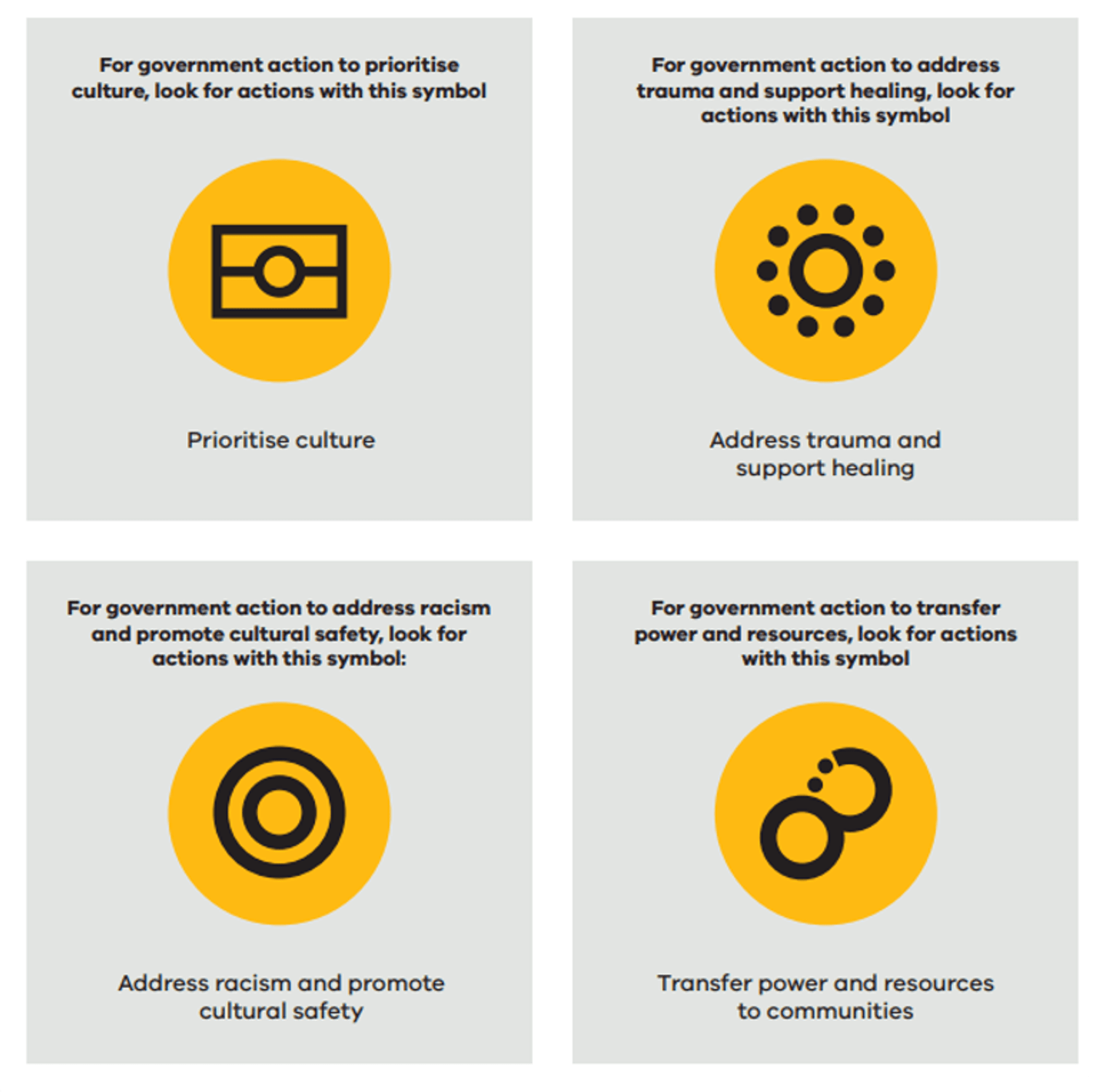
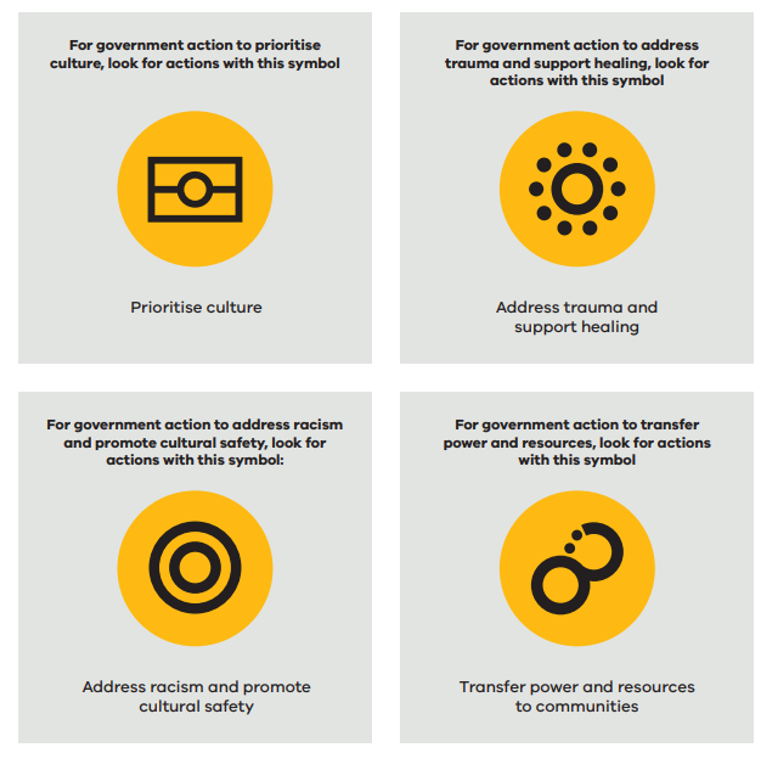
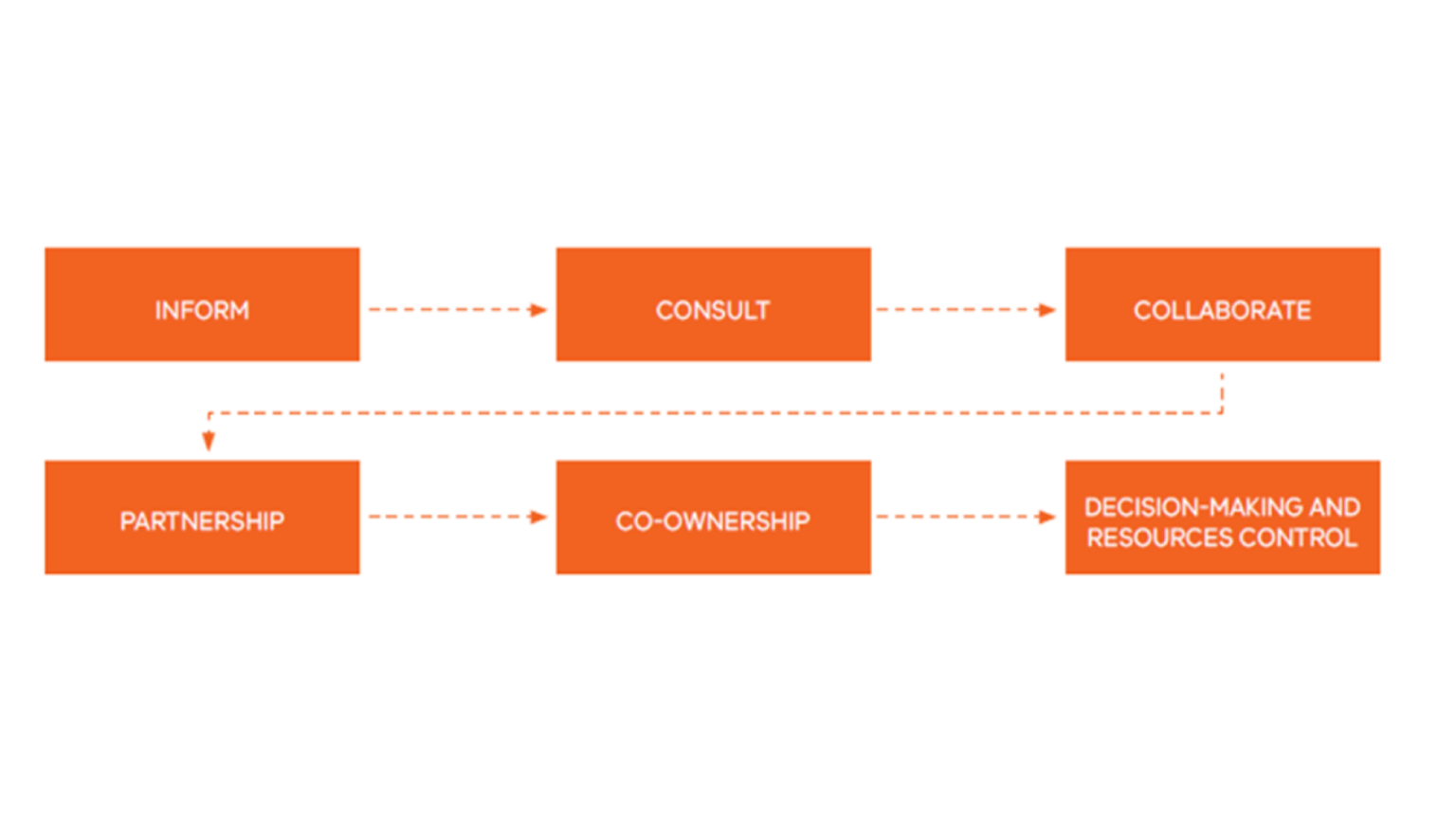
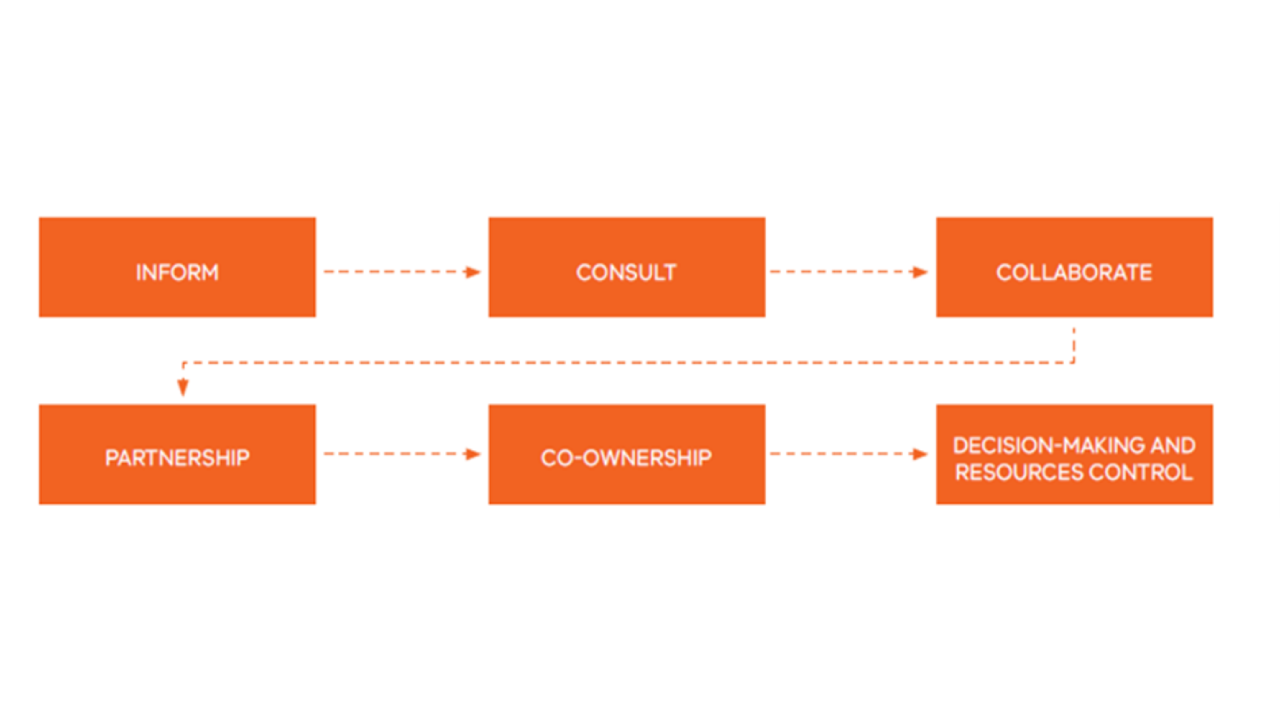
It reports on the department’s progress toward embedding the VAAF self-determination enablers (figure 1) across all systems, processes and practices. It aims to measure where on the VAAF self-determination continuum (figure 2) our actions are landing and invoke reflection on how to move further along that spectrum.
Progress on current DPC self-determination actions and new 2025 actions
This year, the Report demonstrates some progress from across DPC. Key achievements and milestones towards each self-determination enabler are outlined below.
Prioritise culture
- DPC induction program revised to include a dedicated session on Treaty.
- All new infrastructure projects announced through the budget process will be considered for Traditional Owner naming where appropriate.
- The DPC Aboriginal Staff Network meets fortnightly.
- DPC will support 300 VPS places in Treaty Micro-Credential courses from March 2025 to June 2027.
Address trauma and support healing
- Two collective in-person apology events were delivered to Stolen Generations across 2024 and 2025, with continued support for written apologies.
- DPC is coordinating the State's final response to the Yoorrook Justice Commission, which will include a response to each of the 100 recommendations contained in Yoorrook for Transformation.
- FPSR continue to meet regularly with Ngaweeyan Maar-oo at various levels to discuss the Closing the Gap Partnership Forum.
Address racism and promote cultural safety
- Survey results show a high and growing proportion of staff reporting having a strong understanding of cultural safety and self-determination.
- The Diversity on Victorian Government Boards Guidelines have been implemented.
- Victoria's Anti-Racism Strategy publicly launched in November 2024.
Transfer power and resources to communities
- DPC currently exceeds the whole of government 2 per cent target for Aboriginal employees and a 2 per cent target for each group is sought moving forwards.
- Victoria supported the establishment of a national Data Policy Partnership by Joint Council decision in June.
- The VAAF data dashboard increased the amount of data visualised, specifically, in the amount of data disaggregated by geography.
- FPSR undertakes continued enhancements to the Victorian Government Aboriginal Affairs Report annually.
- DPC has provided resourcing for all Victorian Government departments for Treaty roles and Treaty Executive Coordinators.
Figure 1. Self-determination enablers
Barriers and opportunities
Common barriers to completing actions observed across groups include loss of institutional knowledge and momentum due to staff turnover, ongoing competition for Aboriginal staff and difficulty collecting relevant data to track performance against all VAAF goals.
Common opportunities identified across the groups include a strong interest in learning about Treaty, induction materials reflecting Victoria as a Treaty state, considering cultural safety as part of professional development and identification of Aboriginal and Torres Strait Islander Staff during the onboarding progress to connect with relevant staff networks, peer mentoring and existing culturally safe organisational support.
DPC acknowledges that significant transformation is required to overcome the legacy of colonisation and dispossession. We must challenge existing ways of working to strive towards transferring decision-making control to First Peoples on the matters that affect their lives.
Figure 2. Self-determination continuum
DPC’s First Peoples workforce
DPC is on track to meet the Barring Djinang First Peoples employment target of 2 per cent for the Victorian Public Service. As of 30 June 2026, DPC’s workforce data indicated that 16 DPC staff identify as Aboriginal and/or Torres Strait Islander. This is a reduction of 6 since the previous year, where 22 DPC staff identified as Aboriginal and/or Torres Strait Islander.
While the Aboriginal Staff Network continues to play an important role in supporting First Peoples staff, there is a significant need for DPC to increase the representation of First Peoples in DPC and across the VPS, while also improving the quality of the workplace and experiences of current and future First Peoples staff. This will in turn, build the capacity of the VPS to enable self-determination in all policies and programs.
Changes to commitments during 2024-25 period
A review of DPC's commitments under the SDRF lead to certain modifications for 2024-25.
In 2024, a review of DPC commitments under the SDRF was undertaken and identified several commitments should apply or could be modified to become appropriate for all groups to work towards.
Through this approach, commitments such as considering Treaty and truth processes, improving cultural safety capability and working towards a two per cent Aboriginal employment target are the responsibility of every group. The table below shows where previous commitments have been superseded.
| Group | Superseded Commitment | New Commitment (DPC-wide) |
|---|---|---|
| Public Administration | Ensure that staff assisting in Treaty and truth processes, and other matters involving First Peoples, such as Land Justice, are trained appropriately and supporting these processes. | All staff ensure Treaty and truth processes, and other matters involving First Peoples, are accounted for in their work. |
| Social Policy | Support actions and implementation of DPC Aboriginal Workforce Strategy and create more career opportunities, informed by the strategy once finalised. | All Groups work toward a two per cent Aboriginal employment target. All Groups investigate opportunities to support First Peoples’ employment programs such as cadetships and Barring Djinang internship program. |
| Social Policy | All staff engage in at least one training session per calendar year to embed self-determination and cultural safety into core business and workplace culture of DPC by ensuring all staff develop capability and apply to day-to-day work and interactions, such as in reviewing budget bids, funding agreements and in providing policy advice to government | All staff improve cultural safety capability and understanding of self-determination. |
| Public Administration | OGC will incorporate self-determination considerations, where appropriate and relevant, when providing legal advice to lead policy and law reform branches in DPC. For example, OGC to be conscious of self-determination principles when reviewing documents such as funding agreements involving First Peoples | All staff improve cultural safety capability and understanding of self-determination. |
| First Peoples – State Relations | Increase all staff awareness of how self-determination relates to their work. Continue to ensure self-determination informs everyday policy thinking and interactions with other departments, including budget considerations | All staff improve cultural safety capability and understanding of self-determination. |
| Economic Policy & State Productivity | Ensure all economic policy advice includes self-determination considerations by delivering training and/or resources to policy teams | All staff improve cultural safety capability and understanding of self-determination. |
Commitments across whole of DPC
Read about DPC's commitments under the SDRF.
DPC commitments
Economic Policy and State Productivity
Read about Economic Policy and State Productivity (EPSP) branch's commitments under the SDRF.
EPSP's commitment
| Timing | Ongoing |
|---|---|
| Domain | Systems |
| Enablers | Prioritise culture |
| Status | Intended outcomes Increase focus on embedding early engagement as part of any infrastructure decision making process. Current status
|
| Barriers/risks |
|
| Next steps |
|
Publication Administration
Read about the Public Administration branch's commitment under the SDRF.
Public Administration's commitment
| Timing | Completed |
|---|---|
| Domain | Systems |
| Enablers | Address racism and promote cultural safety Transfer power and resources to communities |
| Status | Intended outcomes Support the transfer of power to First Peoples by promoting their involvement on government boards. Current status
|
| Barriers/risks |
|
| Next steps |
|
First Peoples - State Relations
Read about the First Peoples - State Relations (FPSR) branch's commitments under the SDRF.
FPSR's commitments
Office of the Secretary
Read about the Office of the Secretary's commitments under the SDRF.
Office of the Secretary's commitments
| Timing | Ongoing |
|---|---|
| Domain | People |
| Enablers | Transfer power and resources to communities |
| Status | Intended outcomes Promote Treaty preparedness across government. Current status
|
| Barriers/risks |
|
| Next steps |
|
| Timing | Ongoing |
|---|---|
| Domain | People |
| Enablers | Prioritise culture Address racism and promote cultural safety |
| Status | Intended outcomes Promote Treaty preparedness across government Whole of government engagement supports Treaty negotiations. Current status
|
| Barriers/risks |
|
| Next steps |
|