

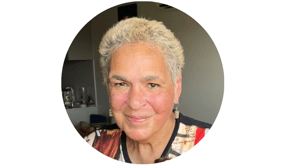
- Inducted:
- 2026
Destiny Deacon was a beloved sister and Aunty, and proud Queer woman who changed Australian art forever. Destiny’s work used humour, photography, and storytelling to interrogate race and racism in Australia. Disrupting the ways that Indigenous people had been portrayed in Australia, Destiny brought a new perspective to the everyday images and stories that had perpetuated racist ideas about Indigenous people and life.
Destiny was born in Maryborough, Queensland, the second of 7 siblings from mother Eleanor Harding, and proud sister to Deborah, Kedron, John, Janina, Clinton, Tom. From her father, Warren Deacon, Destiny was fortunate to have another set of siblings, Yvonne, Danza, Delta, and Sean. Destiny was blessed to have a loving life partner Virginia Fraser. A descendant of the KuKu (Cape York) and Erub/Mer (Torres Strait) peoples, Destiny drew deep inspiration from her mother, Eleanor Harding. Aunty Eleanor moved to Melbourne in the late 1950s and helped start many Indigenous organisations in Melbourne. Destiny grew up around Fitzroy and Port Melbourne, in the boarding houses and commission flats that were home to many Aboriginal families. Surrounded by Aunties, Destiny and her siblings grew up in a loving, caring community, despite the poverty that faced many Aboriginal families at the time.
Destiny Deacon attended the Nott Street State School, JH Boyd Girls’ High School, and Mac.Robertson Girls’ High School before going on to study politics at The University of Melbourne. After that, she studied teaching and graduated from La Trobe University in 1981. She later worked with Charles Perkins training Aboriginal staff in federal government. Education and teaching remained important to Destiny throughout her life. She was a teacher and mentor and empowered many young people to pursue art and leadership.
She promoted Indigenous visibility through radio, teaching, and public conversation. Her art challenged structural racism and celebrated Indigenous culture, history, and experiences. This made her work a source of pride and power for many Indigenous people.
Destiny began taking photographs in the early 1990s. Very quickly, her work gained international attention. Her style was innovative and radically different from many other artists at the time. She used dolls, toys, and everyday household objects in staged, playful scenes that conveyed biting social commentary. The images could be funny, surprising or even make people uncomfortable. She used this mix of humour and tension to make people think more deeply about racism.
One of the most important parts of Destiny’s work was her use of comedy. She believed that humour could be a powerful way to talk about difficult topics. Instead of only showing sadness or anger, she used irony and exaggeration. This helped her to challenge stereotypes about how First Peoples are portrayed. Her art often asked viewers to think about who controls stories and images. Destiny wanted people to think about whose voices are heard and how ideas get passed on.
Destiny worked in many forms, including photography, video, installation, and performance. She collaborated with other artists and often worked with family, friends and creative partners. These collaborations helped her experiment with new ideas and push her work in new directions. Even though her art could be playful, it was always thoughtful and carefully planned.
Destiny famously took the ‘c’ out of the word ‘Black’. For many years, the word ‘Black’ was used as a slur against Indigenous people. Destiny held an exhibition in 1991 that she titled ‘Blak lik mi’. Now, the word ‘Blak’, spelled without the ‘c’, is very common, and expresses a uniquely Australian, contemporary and urban Indigenous identity. Reclaiming and reinventing the word ‘Blak’, Destiny brought the term to the art world and encouraged Indigenous people to define themselves on their own terms. Using language like this can be a form of cultural empowerment. It helps people resist being defined by others and to fight against stereotypes.
Destiny Deacon was famous for fighting stereotypes with humour. She used everyday and mass-produced objects that depicted Indigenous people in stereotypical ways. By repositioning these objects, Destiny created critical social commentary. She also included cultural stories and ideas in subtle and powerful ways. Whilst her work was often humorous, she also drew on lived experiences of grief and loss. Before Destiny Deacon, no-one had done this in quite the same way.
Destiny had an international profile. She brought contemporary Indigenous art to a global audience and won many awards. Some her most important exhibitions include:
- Havana Biennale (1994, 2009)
- Johannesburg Biennale (1995)
- Sydney Biennale (2000, 2008, 2024)
- Yokohama Triennale (2001)
- Documenta 11 in Germany (2002)
- Sharjah Biennale (2023) in the United Arab Emirates.
Her work has also been the subject of 2 major retrospectives:
- ‘Walk & don’t look blak’ at Sydney’s Museum of Contemporary Art Australia (2004-2005)
- ‘DESTINY’ at the National Gallery of Victoria (2020).
Destiny received many prestigious awards, including:
- the inaugural Yalingwa Artist Fellowship (2018)
- an honorary Doctor of Education from La Trobe University (2019)
- Centenary Medal and Honorary Fellowship of The Royal Photographic Society (2022)
- the Red Ochre Award from Creative Australia (2022).
Throughout her long and influential career, Destiny Deacon remained an activist, an educator, and a trailblazer for queer rights. Globally recognised and locally celebrated, Destiny Deacon’s ability to satirise racism challenged audiences and changed conversations. Her life and work speak to the power of community and the importance of truth-telling. Destiny Deacon’s legacy is one of pride, creativity and empowerment, which continues to inspire her family, her community and artists around the world.
Updated